Roof Defects in Birmingham Properties: What Our Surveyors Find Most Often
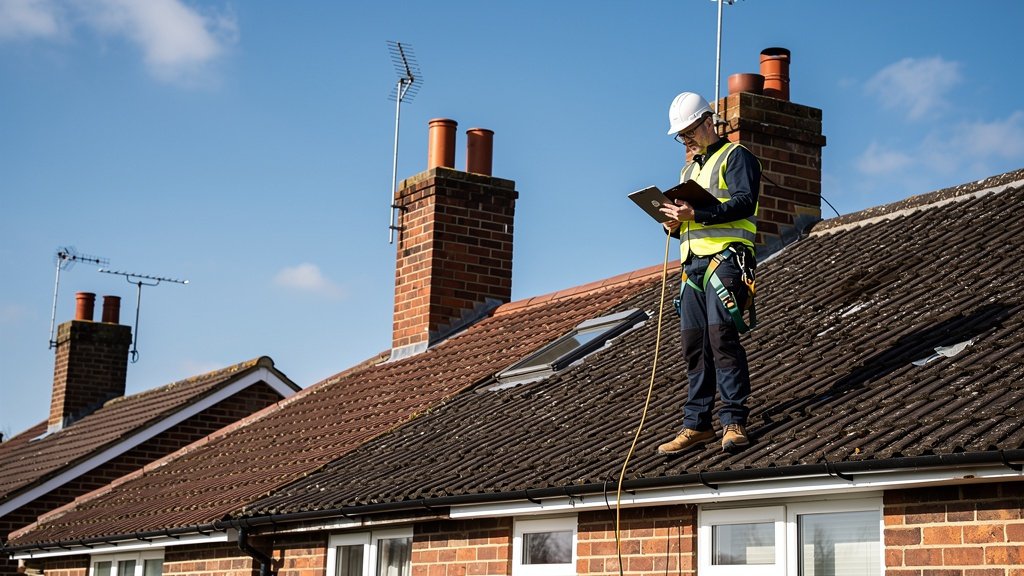
The roof is one of the most critical elements of any property — and it is one of the most expensive to repair. When Birmingham Surveyors UK flags roof issues in a survey report, clients take notice. And rightly so. Roof problems in Birmingham properties can range from a few missing tiles (low cost, easy fix) to complete roof replacement (£8,000–£20,000+ depending on property size).
Here is what our surveyors find most often during roof inspections in Birmingham — and what you should do about it.
Roof Types Common in Birmingham
Before we discuss defects, it helps to understand the roof types our surveyors encounter most often in Birmingham:
- Traditional slate roofs: Victorian and Edwardian properties in Birmingham typically have Welsh or natural slate roofs. These can last 100+ years when maintained, but old slates eventually deteriorate and fixings (nails) corrode.
- Clay or concrete tile roofs: Inter-war and post-war housing typically used concrete interlocking tiles or clay plain tiles. These have good longevity but are susceptible to frost damage and poor pointing at hips and ridges.
- Flat felt roofs: Common on extensions and garages throughout Birmingham's housing stock. Standard felt has a lifespan of 15–20 years. Many flat-roof extensions in Birmingham are well past this age.
- Modern single-ply or GRP roofs: Increasingly common on newer extensions. Longer lifespan (25+ years) but require specialist assessment when defective.
The Most Common Roof Defects We Find in Birmingham
1. Missing, Slipped or Cracked Slates and Tiles
Individual slate or tile failures are the most frequently noted roof defect in Birmingham surveys. They create direct paths for water ingress, which can cause significant damage to roof timbers, ceilings and upper-floor rooms if left unaddressed. Repair cost: £150–£500 for individual repairs; £2,000–£6,000 for partial re-slating.
2. Failed Leadwork and Flashings
Lead flashings seal the junction between the roof covering and vertical surfaces — chimney stacks, dormer windows, parapet walls. When flashings fail, water runs directly into the building fabric. This is among the most common causes of penetrating damp in Birmingham's Victorian and Edwardian properties. Re-leading a chimney stack: £600–£1,500.
3. Chimney Stack Defects
Birmingham properties typically have one or more chimney stacks, and these are frequently in poor condition — failed pointing, deteriorated brick, cracked or leaning stacks, missing chimney pots. A significant proportion of the water ingress our surveyors find in upper floors and loft spaces originates from chimney stack failures.
4. Ridge and Hip Bedding Failure
Ridge tiles and hip tiles are traditionally bedded in mortar, which eventually weathers and fails. Loose or missing ridge tiles are a common finding in Birmingham surveys of properties built before 1990. In storms, loose ridge tiles can fall and create a safety hazard as well as allowing water ingress. Re-bedding ridge tiles: £500–£2,000 depending on length.
5. Flat Roof Defects
Flat-roof extensions are ubiquitous in Birmingham's Victorian housing stock. Felt flat roofs typically develop cracks, blisters and perimeter seal failures after 15–20 years. Signs of failure include water staining on ceilings below, bubbling or cracking of the felt surface, and ponding water. Full flat roof replacement: £1,500–£4,500 depending on area and specification.
6. Guttering and Rainwater Goods
While not part of the roof structure itself, gutters and downpipes play a critical role in managing roof water safely away from the building. Blocked, cracked or poorly aligned gutters are a leading cause of penetrating damp in Birmingham's older properties. Cast iron guttering — common in Victorian and Edwardian properties — is particularly prone to rust and joint failure.
How We Inspect Roofs in Birmingham
Our roof inspection methodology varies by survey level. In a Level 2 survey, we inspect the roof visually from ground level and from within the loft space where accessible. In a Level 3 survey, we access the roof space fully (where safe to do so) and inspect in significantly greater detail, assessing roof structure, insulation, water ingress evidence and the condition of all visible elements.
In some cases, yes — particularly where our survey identifies significant or complex roof defects, or where access has been limited. We will specify in our report where a specialist roofer's investigation is recommended. For most routine roof defects, our survey report provides sufficient information to obtain repair quotes.
Yes — roof defects are one of the most effective bases for price negotiation in Birmingham property transactions. Our surveyors provide estimated repair costs in their reports, which you can present to the seller as the basis for a price reduction. See our guide on using your survey to renegotiate.
Book a Building Survey in Birmingham
Our Level 3 surveys include thorough roof and loft space inspection. Covering all of Birmingham and the West Midlands.