Extension and Loft Conversion Surveys in Birmingham: What Every Buyer Needs to Know
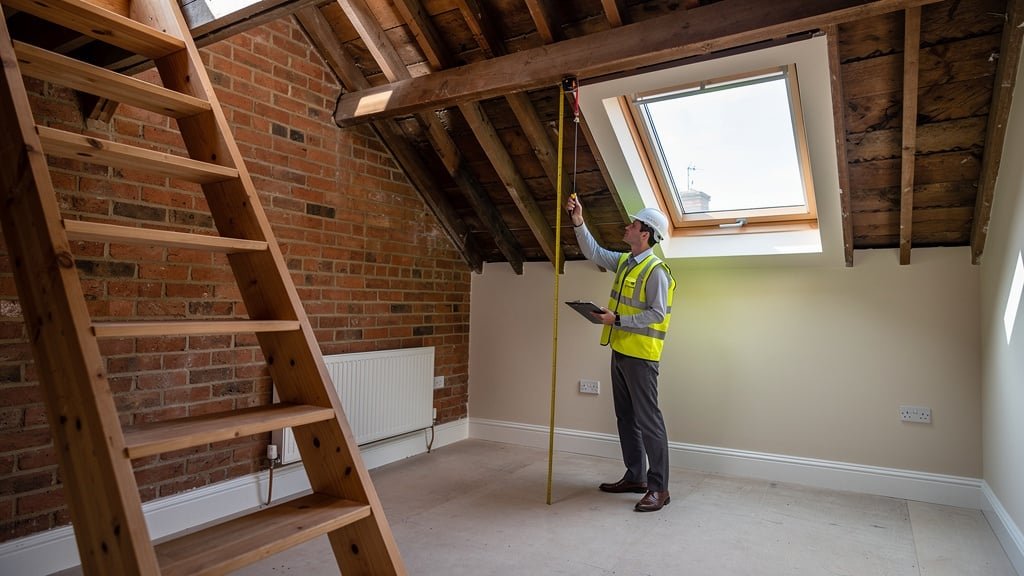
Extensions and loft conversions have transformed Birmingham's Victorian and Edwardian housing stock over the decades. From rear kitchen extensions and side returns in Moseley and Harborne, to dormer loft conversions in Kings Heath and Erdington, altered and extended properties are now the norm rather than the exception across the city.
But while a well-executed extension adds genuine value and living space, a poorly built, uncertified or deteriorating extension can be a serious liability — one that only a thorough RICS survey will identify before you exchange contracts.
At Birmingham Surveyors UK, extensions and conversions are among the areas we pay most careful attention to in every survey we carry out. This guide explains why they matter so much, what we look for, and what you should do if you are buying a Birmingham property with an extension or conversion.
Why Extensions and Conversions Need Careful Survey Scrutiny
Extensions and loft conversions built without proper oversight carry a range of risks that are not always visible to the untrained eye:
- No building regulations approval — work carried out without building control sign-off may not meet structural, fire safety, insulation or drainage standards. This can affect your mortgage, insurance and the ability to sell the property in future.
- No planning permission — while much extension work falls within permitted development rights, this is not always the case — particularly in conservation areas (such as parts of Edgbaston, Bournville and Harborne), on listed buildings, or where the scale of works exceeds permitted development limits.
- Poor construction quality — extensions built by non-specialist builders, or where costs were cut, often exhibit defects that only become apparent years later: inadequate foundations, poor weatherproofing, cold bridges, flat roof failures and structural movement.
- Integration issues — where an extension meets the original property, junctions are vulnerable to water ingress, differential settlement and thermal inefficiency if not properly detailed.
The Most Common Extension Types in Birmingham Properties
Rear Single-Storey Extensions
By far the most common extension type across Birmingham's Victorian terraces and inter-war semis. These typically extend the kitchen or create an open-plan kitchen-diner at the rear of the property. Key survey concerns include:
- Flat roof condition — the vast majority of single-storey rear extensions in Birmingham have flat felt roofs. These have a typical lifespan of 15–20 years and many are now well beyond this age. We check for blistering, cracking, ponding water, failed perimeter seals and evidence of internal water ingress (staining on ceilings below).
- Structural opening — where the extension has opened up the rear wall of the original property, a steel beam (RSJ) or concrete lintel must span the opening. We check for evidence of inadequate support, deflection or cracking at the beam ends.
- Foundation adequacy — older rear extensions were sometimes built on minimal foundations. Signs of differential settlement (cracking at the junction between extension and original building, sloping floors, sticking doors) can indicate inadequate foundations.
- Drainage and guttering — the extension roof must drain adequately. We check that rainwater goods are present, connected and free-flowing, and that drainage from the extension connects correctly to the property's drainage system.
Side Return Extensions
Common in Birmingham's Victorian terrace stock, side return extensions fill the narrow passage between the rear of the house and the boundary. They are popular for creating wider kitchen spaces. Specific survey concerns:
- The junction between the new side extension roof and the original rear wall — a common point of water ingress if flashings are inadequate.
- Party wall issues — where the extension is built up to or on the boundary with a neighbour's land. A Level 3 Building Survey will identify any visible evidence of party wall disputes or inadequate construction at the boundary.
- Rooflights — side return extensions often feature rooflights to bring natural light into what would otherwise be a dark space. We check rooflight frames, glazing units and kerb flashings for signs of failure or condensation.
Two-Storey Rear Extensions
More substantial and requiring full building regulations approval in all cases (and planning permission in most cases), two-storey extensions are common on larger Birmingham semis and detached properties in areas such as Sutton Coldfield, Solihull and Edgbaston. Our survey scrutiny includes:
- Structural integrity of the new walls and the structural opening into the original building at both ground and first floor levels
- Pitched roof covering, eaves detailing and guttering of the upper roof level
- Window and door installation quality, including lintels, sills and weatherproofing
- Thermal performance — two-storey extensions built before 2010 may have inadequate wall insulation by modern standards, which we note in our report
Loft Conversions
Loft conversions are extremely common across Birmingham's Victorian and Edwardian housing, and range in quality from well-engineered, fully certified dormer or hip-to-gable conversions to informal bedroom-in-the-roof arrangements that may not comply with building regulations. Our inspection focuses on:
- Structural adequacy of the loft floor — original ceiling joists in Victorian properties are generally not designed to carry the floor loads of a habitable room. A compliant loft conversion requires new structural floor joists (typically doubled-up or replaced with deeper sections). We check for evidence of this work and for any signs of floor deflection.
- Roof structure alterations — dormer conversions require significant alterations to the original roof structure, introducing new structural elements (ridge beams, rafters, valley beams). We check that these are adequately supported and show no signs of movement or distress.
- Fire safety and means of escape — building regulations require that a habitable loft room has an adequate means of escape in the event of fire, typically via a window of specified dimensions, a fire-protected staircase, or both. Non-compliant escape provisions are a significant issue that affects mortgage lender acceptance and insurance cover.
- Staircase — the staircase to the loft conversion must meet building regulations requirements for width, headroom and handrail provision. Narrow, steep or inadequately headroomed stairs are a common non-compliance in older conversions.
- Insulation and thermal performance — we check for adequate insulation to the roof slopes, gable walls and floor of the loft conversion, and note where thermal performance appears insufficient.
- Party wall condition — where a loft conversion has been carried out adjacent to a neighbour's property, we inspect the condition of the party wall in the loft space and check for evidence of fire-stopping at the party wall head, as required by building regulations.
Regularisation: What Happens When There Are No Building Regs?
A significant proportion of the extension and loft conversion work we encounter in Birmingham surveys was carried out without building regulations approval — or where approval was granted but a completion certificate was never issued. This is a real-world problem, not an edge case.
If your survey identifies a lack of building regulations documentation, there are several routes available:
- Regularisation application — where work was carried out after 11 November 1985, the owner can apply to Birmingham City Council for a regularisation certificate. The building control officer will inspect the work, and some opening-up may be required to verify hidden elements (foundations, structural members). Cost: typically £300–£800 for residential works.
- Indemnity insurance — for older work where regularisation is impractical or disproportionate, it is common for sellers to obtain indemnity insurance to cover the risk of enforcement action by the local authority. Your solicitor will advise on whether this is an appropriate solution in the context of your transaction.
- Price negotiation — the cost of remedying building regulations non-compliance (or the risk it represents) is a legitimate basis for negotiating the purchase price downwards. Our survey report will note non-compliance where identified and can be used directly in negotiations with the seller.
It is important to understand that indemnity insurance does not fix the underlying issue — it simply provides financial protection if enforcement action is taken. It does not guarantee that the work itself is structurally sound or safe. Only a thorough survey can provide that reassurance.
Conservation Areas and Listed Buildings in Birmingham
Birmingham has a number of designated conservation areas — including parts of Edgbaston, Bournville, Jewellery Quarter and Harborne — as well as a significant stock of listed buildings. If you are purchasing a property in a conservation area or buying a listed building, planning controls are much more restrictive and any extension or alteration work (including replacement windows) that was carried out without listed building consent or conservation area consent may be unauthorised and potentially subject to enforcement action.
Our surveyors are experienced in identifying works that may be relevant to planning or listed building considerations, and will flag these in our reports. We work closely with specialist planning consultants who can advise further where needed.
What Survey Level Do You Need for an Extended Property?
For any Birmingham property that has been extended or converted — regardless of the apparent quality of the work — we strongly recommend a RICS Level 3 Building Survey. The Level 3 survey allows us to:
- Describe the construction method and materials of the extension in detail
- Assess structural adequacy and identify any signs of movement, distress or defect
- Provide a narrative assessment of the condition of all elements of the extension
- Note where building regulations documentation appears to be absent and recommend appropriate action
- Estimate repair costs for any defects identified
A Level 2 HomeBuyer Survey is less appropriate for extended properties because its structured format provides condition ratings but less narrative detail about the specific characteristics and risks of non-standard construction — which all extensions, by definition, represent.
Key Questions to Ask Before You Buy
If you are viewing a Birmingham property with an extension or loft conversion, here are the key questions to put to the estate agent or seller before booking your survey:
- When was the extension/conversion carried out?
- Is there a building regulations completion certificate?
- Is there planning permission documentation (if required)?
- Who carried out the work — a specialist contractor or a general builder?
- Are there any known issues with the extension — leaks, damp, cracking?
- Has the flat roof (if present) ever been replaced, and when?
- For loft conversions: is there a building regulations certificate confirming fire safety compliance?
The answers to these questions — or the absence of documentation — will inform the scope of the survey we recommend and the areas we focus on most closely.
It depends on the lender and the nature of the work. Many lenders will accept an indemnity insurance policy as an alternative to building regulations documentation for minor works. However, for significant structural work — a two-storey extension, a loft conversion — some lenders will require either a regularisation certificate or a structural engineer's sign-off before they will lend. Your mortgage broker and solicitor should be involved in any property where building regulations documentation is missing.
Not necessarily. It depends on the nature and severity of the issues identified. Minor defects in an otherwise sound extension — a flat roof reaching the end of its life, guttering that needs attention — are entirely normal and can be addressed through price negotiation. More serious issues — structural movement, fire safety non-compliance, inadequate foundations — require more careful consideration. Our surveyors are always happy to discuss findings after the report is issued and help you understand your options.
A building survey provides a visual assessment of the extension — we cannot review structural calculations or verify that steelwork is correctly sized without invasive investigation. Where we identify signs of structural concern (cracking, movement, deflection) we will recommend a specialist structural engineer's investigation. If you want formal confirmation that the structural design is adequate, a structural engineer's report — commissioned separately — is the appropriate route.
A pre-sale survey is increasingly popular with vendors who want to understand the condition of their property before it goes on the market — and to avoid surprises during the buyer's survey process. It allows you to address issues in advance, set a realistic price, and provide buyers with confidence. Contact us to discuss a vendor survey for your Birmingham property.
Buying a Birmingham Property with an Extension or Conversion?
Our RICS Level 3 Building Survey gives you the full picture — construction, condition, compliance and repair costs. Covering all of Birmingham and the West Midlands with fixed transparent fees.